You already know what's up. It's videogames o' clock. Please do not look at the date on the changelog and notice how late I am to videogames o' clock again. I am trying my best
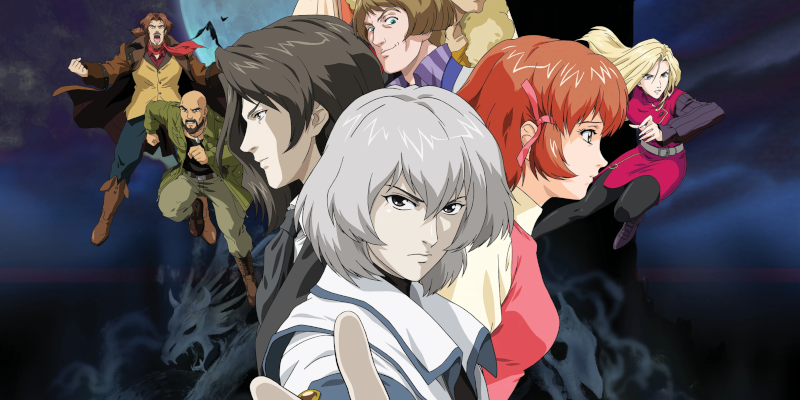
CASTLEVANIA: DAWN OF SORROW
We are wasting no time getting the obligatary Castlevania up in here. Okay maybe definitely we are wasting a little time, because I did beat this like three months ago and just never actually got around to talking about it, because my brain has been a piece of burnt toast for a frustratingly long time now. It's bad enough lately that I was considering just holding off on this article until the end of the year to drop it all at once, but knowing me that just means the site is dead for a year, so!! I am not doing that because I will feel bad about it. They literally announced a new Castlevania between when I started writing this and now and they never do that anymore. Listen. Listen. I am putting my hand on your shoulder. Listen. I'm gonna try so hard to finally get this stupid ADHD medicated this year,
Anyway I was watching someone play through Aria and it put the bug in me again, so it only felt natural to hop straight into that game's direct sequel. Dawn of Sorrow for the DS is currently the final game in the series' chronology, set a year afterwards; Soma, in a now Dracula-free world, has a run-in with a cult who would very much like him dead so that someone else can step up and inherit the role of Dark Lord. The justification they explicitly provide here is that they think there needs to be an equally great evil in the world for God's goodness to mean anything, which you could probably read into as some sort of commentary on the state of religion that's just as relevant now at it was when it was written twenty years ago. You know, if you wanted to. I mean, surely it doesn't mean anything that the cult trying to make the world a worse place on purpose is doing it for ostensibly Christian reasons. That would be ridiculous. Nothing like that has ever happened.
Regardless, since the titular Castlevania is still sealed inside the eclipse from last time, we can't go there. So instead, Soma decides to ignore actual government official Arikado's advice to stay out of the situation to go investigate the suspiciously similar non-Dracula castle that the cult has set up as their base of operations. (Of course Death is also here, don't worry about it too much. Or the whole area lifted straight from Castlevania 1. All castles have that.) Soma might be acting impulsive and actively complicating things and being 19 years old, but somehow he balances out as squarely in the middle of the maturity spectrum between the four grown-ass adults also returning from Aria. Arikado (who's definitely not Alucard what are you talking about) and Julius are handling this like the professionals they are while Hammer and Yoko are over in the far corner of the map having a very insecure unrequited crush subplot like they're in a mediocre high school sitcom. You just kind of have to feel embarrassed for them, really.
This game is also the first of what are known as the "animevanias", owing to its artstyle shift that happened because they were concerned Ayami Kojima's gorgeous painted illustrations wouldn't appeal as much to the younger demographic they were aiming for on the DS. This was a divisive choice, and it's obviously not better because Kojima's work is incredible (and I think about it daily and aspire to it as a personal aesthetic and), but I don't hate what they've done with this style at all. I like the fact that it does just straight up look exactly like an animation cel with no extra frills, which isn't actually something you see a lot in games. The characters are still drawn with decently realistic faces instead of going for a more overtly Anime (Derogatory) artstyle where the girls look more like some type of bug. Its greatest offense is just being different and following an act that's hard to top. I won't fault it for that.
Gameplay-wise, it's more of Aria with a couple new systems thrown in. The DS gimmick comes of course in the form of drawing things on the touch screen, which in practice amounts to a signature field for the save file instead of text-based name entry (I just drew a spider), some ice blocks you can break in maybe half a dozen rooms total, and a mechanic that nobody really likes where you have to draw a magic seal when you beat a boss to successfully defeat them, or else it'll heal a bit and you have to keep going. Full disclosure: I emulated this and knew it would suck to attempt to interface with this mechanic with a mouse, so I did use a cheat code that automates the seals after you draw the first line. For what it's worth, I did get a taste of the vanilla experience anyway because it took me until the literal last area to understand I couldn't let go of the touchscreen early or the automation wouldn't work consistently. The "what do you mean that doesn't count" effect lives on. I wasted so much goddamn time on Abaddon, man.
The other major addition is Yoko's shop, which gives you an actual use for all of the duplicate monster souls you'll inevitably accumulate by allowing you to create stronger weapons through synthesis. This establishes sort of an extra rhythm to the gameplay loop, because as you explore and find warp rooms you've got an excuse to swing back around to the start to see what you can make with whatever new stuff you've acquired. The game clearly also expects you to be doing this constantly because Yoko has so much dialogue that she was constantly bringing up things I did hours ago as if they were new developments. She apparently has to go through all of them in order instead of skipping to the one that happened most recently, for some reason. And then after a while she just stops even though the plot keeps going? It's weird.
Despite that, this game overall feels a lot less focused on its weapons compared to its predecessor. Pretty much every decent weapon is locked behind this system barring super rare enemy drops, so there's basically none actually hidden in the castle for you to stumble across when you explore, and it's balanced in such a way that I was able to get my hands on a very good weapon in the early-midgame and it carried me all the way to the end because nothing else I could make ever outclassed it. Also, pretty much every weapon in the game has a noticeable amount of startup or ending lag that just does not feel very good. I got used to it with my greatsword's overhead swing, where it feels pretty natural to have that and covers good range, which is less than I can say for the way that you lock in place for a solid half second to re-sheathe a katana after every swing. The standard mobility-for-damage tradeoff is kinda meaningless here because all of the lighter weapons still feel way too stiff and sluggish to be worth the damage loss. The only way to make them feel like they used to is by doing this awkward tech where you do a little short-hop just before hitting the attack button every single time, so you're at least not constantly getting your momentum halted. It's a very strange decision.
Once you adjust to the weird feel of the weapons and find something that feels decent enough to you, though, it is just more good Igavania design. Duplicate souls now having a purpose outside of link-cable trading makes finding them feel a lot more rewarding and worth caring about, and the secrets feel more engagingly hidden than they were in Aria. Figuring out how to get the best ending is nice and intuitive and makes you feel real cool in the moment and requires you to go off the beaten path to fight a boss with a really sick design and an awesome gimmick (shoutouts to Paranoia). I'm gonna be so honest though it's been like months since I started writing this and I have largely forgotten if there was anything else I wanted to write about this. It's good! It's a good game! I liked it!! Castlevania!!
As is now tradition, Julius mode returns from Aria as a NG+ option to give you an alternate playstyle, which in this case is actually three playstyles because you can swap him out with Yoko and later Alucard (not in disguise anymore, just a straight port of his SotN sprite) to take advantage of their unique abilities and get through mobility gates that Julius can't do himself. This mode is set after one of the bad endings and has a special final boss fight against Soma himself, who has fallen to the thrall of darkness. To be totally real the other reason this took five hundred years to write is that I just kinda lost interest partway through this mode and didn't actually beat it, which is also what happened to me with Aria's Julius mode even though it's significantly shorter than the main game. I dunno what it is! It's neat that they're integrating these modes more believably with the story now, but it's just less compelling to me compared to how much of SotN's original Richter mode is a comically technical and flagrantly noncanon navigational puzzle about gaining infinite height with flying uppercuts. I find it more endearing when the game is willing to be openly ridiculous and wants you to play with it like a toy. That was my favorite thing about Symphony.
Anyway while I am not dumping the whole article at the end of the year I have ended up sitting on this for long enough that I do have another game to talk about today. So everybody give us a round of applause for
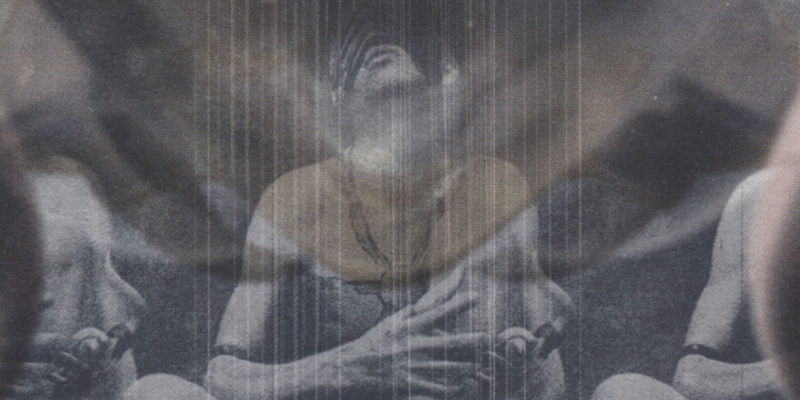
SHADOW TOWER
The Fromsoftathon is back! It's trundling along as a snail's pace, but this is very fast for me. I promise. The rhythm that I am taking with these has consistently been playing a chunk of it while riding the high of the previous game, thinking the changes are weird to adjust to and taking a break for a few months, and then coming back to it and suddenly being unable to put it down. As long as it gets the job done it's fine by me. It is frankly miraculous that I've finished this many of these now.
Shadow Tower is From's fourth dungeon crawler after the PS1 King's Field trilogy, released two years later while their yearly cycle brought us the original Armored Core and its prequel in the intervening time. (I may circle back around to these games later, but right now this is enough of a commitment as-is and I'm honestly shocked I've gotten as far as I have.) This game has actually been in the back of my mind as something I've been meaning to play for years, and the whole time I've known basically nothing about it, so now having the context for what it is has made me kinda glad I held off on it until I'd played its predecessors. This game is unconventional and uncompromising and I don't think I would have really been able to appreciate it if I'd come at it totally blind back when I first learned about it. But now? Oh Baby. Even still, all I really knew about it going in is that it's more overtly horror-fantasy themed and it did not review well, and it was up to me to find out why.
So anyway the first impression the game leaves does kind of make it immediately easy to understand why reviewers did not gel with it, because one of the major creative choices on its part is that there is No music. Nothing. You boot up the game and there's a CG intro video with a song, and then the title screen has an ominous sting play over it, and the opening cutscene plays a little classical string tune while it gives us a brief overview of the plot that amounts to "there is an evil tower". And then it is dead silent for the rest of the game until the ending cutscene. You've got the echoes of your footsteps and the sounds of any monsters that are nearby and that's largely it. Later on you encounter more stuff that makes ambient noise and fills out the soundscape a little more, but at first blush the emptiness of it all makes the game almost feel unfinished, like you're playing a prototype. Likewise, there is also no map, so you just have to commit the maze of claustrophobic corridors to memory. It's kind of fascinating to see this type of purposeful omission used as an artistic decision in a medium normally so restricted by this invisible list of expectations and "don'ts". This is in no way a game for everyone, nor is it trying to be. It is for me, though.
The core gameplay is more of what you've come to expect with some extra systems and complexity added onto it; this game notably introduces the equipment weight and durability mechanics, along with the beginnings of the modular stat-leveling system that was eventually a core part of the Souls games. Your stats will increase passively as you kill things, but you can also find Soul Pods out in the wild that allow you to allocate points to your liking into things like health, speed, balance, and different damage types, as well as their magical equivalents that are cryptically-named enough that I had to pull up the game's manual to understand what they actually meant. Which, hey, first time I've had to consult the manual in one of these games! This game also adds a dedicated block button where the magic button formerly was, and the latter now requires a specific two-button combo to cast depending on which hand you currently have the spell equipped on, allowing for you to pick two spells concurrently. The game doesn't tell you what these combos are either, so this was another thing I had to check the manual for because it is extremely important to know. I'm pretty sure this was also a quality certain weapons let you do at least as far back as King's Field 3 because I remember doing it by accident one whole time and when I looked up how to cast spells in this game I had a moment of "oh THAT'S what that was".
The manual also gives us a slightly more helpful idea of the plot: there was once a kingdom that fell to ruin practically overnight because of a terrible crown said to be capable of granting any wish. This crown was sealed away in the tower, and everything was just fine until eventually all of its bad vibes hit critical mass and sank the tower into the depths of the earth like a vortex, reducing the town around it to rubble and consuming the souls of everyone who lived there. This random mercenary named Ruus (or Russ, or Ruth, depending on your translation) happens to pick the worst possible time to stop by and visit this nice granny who lived there, finds nothing left, and meets an old man who immediately mistakes him for someone else and sends him off into the tower to recover the crown and save these lost souls before it's too late for them. So like! Good luck dude, I guess!!
Very little of this ever comes up in the game itself, which really doesn't care much to tell you anything at all. There's a few NPCs around to give you a little bit of guidance about what's going on, but they also imply a lot of things that are just never elaborated on. It's kind of like the way Fromsoft has continued to do their dialogue but without all of the additional lore packed into the item descriptions to help you piece together the bigger picture. The game is perfectly content to just be kind of confusing. It wants to disorient you. There's a lot of little variables reliant on RNG that exist primarily to mess with your head; creepy sounds that can just play at random intervals (but especially like to trigger when you close your menu), rare enemies that have a small chance of spawning in an empty room that you've passed through a dozen times. It wants to get into your brain and freak you out with things that are slightly off. There are equipment effects that change the lighting and it took me several days to suss out why the lights kept turning on and off, because it is so in character for the game to be inscrutable and mess with you using unadvertised state change conditions that I figured it wouldn't be something I was in control of.
Structurally the game initially plays at being more on the linear end; it consists of a number of "worlds" which each have about three to five individual areas, which frequently link to each other but don't tend to interconnect between worlds. Instead, as you descend deeper down, you routinely return to a central hub (the titular Shadow Tower) that consists of narrow stone walkways connecting doors over a dark pit. If you align yourself correctly you can make one-way drops down to visible lower levels, and you can find headstones capable of warping you back up to previous locations in the tower, so you're never actually stuck after you commit to a drop. The bulk of the game does away with the linearity and will have you regularly traversing five out of the six worlds, and the only real reason that you're not returning to the beginning of the game too is that there's a mandatory path you need to pass through to progress where the entire floor is just poison.
As is tradition by now, you eventually unlock a fountain that gives you free full heals, and fully exploring the adjacent world gives you access to a shop relatively nearby where you spend HP in exhange for restoring your equipment's durability, so much of the gameplay loop for me consisted of returning to the fountain and walking over to the shop to repair my stuff after expeditions into the more dangerous lower worlds. It definitely marks a shift where the difficulty finally starts to tilt in your favor, because the ordeal of reaching that shop and unlocking the shortcut to it is a culmination of how much more brutal the game is compared to what came before it, and is something you could probably point to as the emergence of the learn-by-dying runback that is now emblematic of Soulslike level design. This world has numerous points of progress that require you to squeeze your way past enemies that will absolutely melt through your health and are clearly intended as an obstacle; at least one of them will immediately respawn if you go out of your way to kill it, followed by a second completely unique enemy if you kill that one too. You are not meant to fight your way through this, but the game doesn't technically stop you if you wanna chug half your potions trying.
On the topic of the enemies, their AI has been enhanced from the King's Fields to no longer be effortlessly outsmarted by the powerful strategy of "strafe in the opposite direction from where they're turning", but they're not exactly more difficult for the most part because they are instead eminently cheeseable by way of "stand outside of their leash radius on the edge of the room and pick them off while they can't reach you", or, failing that, "stand behind some geometry that blocks all of their projectiles but not yours". To balance this, many of them do a metric ton of damage whenever they hit you, and the final boss fight is conspicuously in an endless corridor with no other geometry so you can't do either of these things to him. It's definitely more difficult to deal with them on average, especially when a lot of them spawn when you've already walked partway through their room, but once you've got yourself set up with good equipment and don't have to worry about your stuff constantly being on the verge of breaking then it's no major issue to deal with most things.
More importantly though. Visually? Their designs are absolutely fantastic. After the previous two games have been progressively branching out from typical sword-and-sorcery ghoulies into weirder and more unique monsters, this is where the floodgates really open up in terms of nonstop excellent creature design; this game marks a massive graphical upgrade from King's Field 3 and all of that extra fidelity has gone straight into rendering more than a hundred of the most bizarre freaks you've ever seen as lovingly as possible. They are easily the star of the show and the devs are clearly rightfully proud of them, to the point that encountering all of the monsters in the game is one of the three things it tracks for completion, along with items and money. They're what originally put this game on my radar thanks to this Bogleech article that covers barely a fifth of the bestiary. This game is ultimately a creature design delivery vehicle and I love it for that. That's like half of the reason I'm here. Every time a rare thing I've never seen before spawns it is a new and delightful treat for me.
Once you've defeated the designated "Lord" of each world, you unlock access to the final boss fight, and upon beating the game you unlock a sort of pseudo-NG+ that resets your position back to the start of the game and seemingly doesn't change anything else about the file save for the final boss now being recorded in the bestiary, and exists entirely for completion cleanup purposes. (Notably, it does not reset the state of the one thing that is capable of permanently locking you out of an optional area if you do something wrong. Ask me how I know!) Going for full completion in this game sounds like the realm of the insane, though, specifically because of all of the possible rare spawns that show up in random empty rooms maybe 5-10% of the time. There's still a solid twenty monsters I have not seen at all in this game, which is way more than a single missing area accounts for. I see this less as an obligation to go grind those out and more as another way for the game to surprise me on potential future replays. Keeps it fresh! Sometimes the completionist mindset is to a game's detriment.
What the bestiary is materially used for is the game's multiplayer mode, which lets a second person insert their memory card with their own file into the system and you can do PVP battles against each other playing as a team of the monsters you've personally seen. I do not have the means to play this at the moment and it makes me very sad because this sounds sick. They were so confident in these creature designs that they just let you do Pokemon with them. I think Fromsoft should bring this IP back to just have an entire game of this.
This marks the end of the PS1 leg of this marathon, and there was originally only one game to go before I got to the fourth and final King's Field, but I may have possibly added another game to the queue before we get there, because I'm admittedly kind of fascinated by a certain creative choice it makes and it has the Moonlight Sword in it anyway so I can say it counts. Both of these games are apparently fairly short, so I'd say they won't take long to get through but knowing how these things go I know this is a lie. I will be back in another few months, more realistically. Probably.
ETERNAL RING
What?? Huh??? It's only been three days. That can't be right. This was supposed to take months. What's going on, where am I
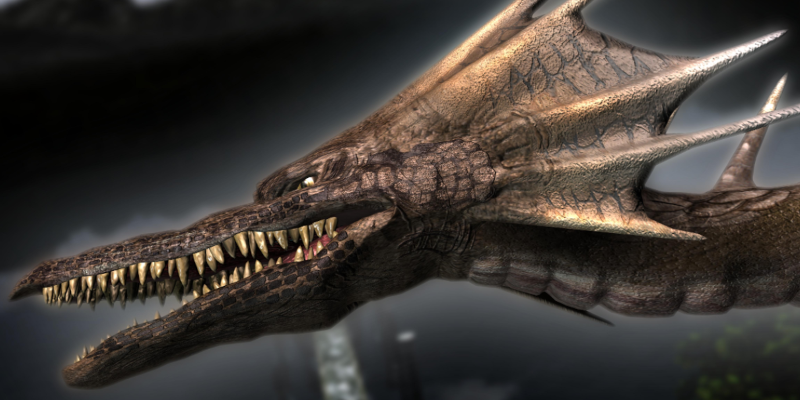
Eternal Ring is Fromsoft's first foray onto the PS2, and was a launch title for the system. It is also the only game in this marathon that I have never seen anybody talk about, ever. Like, during the entire prerelease cycle for the very similarly-named Elden Ring I don't think I ever once saw anyone bring up that they already had a game that was called this. It came out, got mediocre reviews, and promptly disappeared from the public consciousness pretty much everywhere but dedicated King's Field fansites that felt an obligation to document every Fromsoft game in this genre, which is kind of the only reason I am also playing it. It's the one that is Just Kind Of There Too. It's... there's a reason this one doesn't get talked about.
The game's primary gimmick is an expansion on Shadow Tower's magic system being tied to rings as an equipment type: rather than just one per hand, you can now have up to five on each, one being for passive buffs and the other for active spells that can be cycled through using a new hotswap menu (which is itself sort of a repurposing of Shadow Tower's quick-access item wheel). The main mechanic at play with this is that, rather than just finding rings, you can craft new ones using combinations of magic gems that serve as the basic enemy drop and double as the main form of currency in the like two whole shops that exist. There's a ton of potential combinations here, with seventeen possible rings for every basic element, and there's a dedicated collection page tracking which ones you have and haven't owned. This game is all about its magic system and the melee combat is sort of an afterthought; you regain a little bit of MP with every enemy you kill, so there's rarely any real reason to ever stop spamming spells save for the occasional magic-resistant enemy and like one total thing that inflicts Seal. If there's more than four swords total in this game I never saw them.
The game's opening presents us with some fantasy politics that are delivered so hurriedly that it is difficult to actually process any of it (as is tradition by now), and gives us a loosely-remembered backstory for our protagonist Cain Morgan before sending him off to a mysterious island to investigate some shady military operations. He promptly gets swept up in a plot about a war that happened here and a legendarily powerful ring that may or may not have something to do with the people in this island transforming into monsters, while the rest of the political framing in the first cutscene gets largely forgotten until the epilogue. This game aims for more cinematic presentation of its story by including third-person cutscenes, so Cain is the first protagonist in these games to have an actual in-game model that is not just his arms. Congratulations!
The gameplay starts us out on a very similar note to King's Field 2, dropping us on a gloomy beach with a cave system attached that you can follow to find a town with like four houses. This bit of the game kind of aesthetically feels like a tech demo for a sixth-gen take on that game; in general, as a launch title for the system, the graphics are not particularly impressive and the step up between Shadow Tower and this is really not very drastic. It's got sorta higher-res textures and higher polycounts, but it still kinda just looks like a late PS1 game. And really, it sorta loses something in the technical upgrade. The moody atmosphere that's a constant in all of the previous games is just kinda gone most of the time and nothing else has really replaced it. Everything just feels a bit weightless instead.
In a similar vein, I explored a bit on this beginning beach and found I was able to hug the shoreline to sidle around a cliff to a hidden locked door on the other end, which was a reasonably good first impression for secret placement. And then it just kinda never lived up to that again, for the most part. This game's level design is... incredibly basic, in a way that feels like an anomaly having played everything else up to this point. It's almost completely linear, save for some warps to earlier areas that feel like an obligation and a short loop near the end. There is once again no map, but unlike Shadow Tower where the intent is to be disorienting it just seems to be under the impression you won't really need one. There's not really anywhere to get lost, except in the handful of areas that are spacious and winding enough for you to instead constantly get lost in because there aren't really any navigational landmarks either. There's a couple of kind of interesting environmental puzzles every so often, but they are few and far between. Secrets are kind of nonexistent and places that seem like they should reward you for going off the beaten path largely just Don't. I never found a single fake wall in this whole game, not for lack of trying.
While the magic system has been expanded, everything else here has been kinda mechanically flattened in exchange. The melee stamina gauge is gone, visible damage numbers are weirdly gone so you can't gauge enemy resistances to whatever you're using until they die, and the only stats that exist beyond elemental affinities are HP and MP, which increase on a flat level curve. There is no armor in this game. It's just you and all ten of your rings clacking against each other uncomfortably every time you move your fingers. And... honestly, while the ring crafting is a cool idea, in execution it just amounts to gambling. The game doesn't record whatever combination you used to make a specific ring to give you a guess at the logic it uses to calculate them. The only real way to know what is going to produce what is just looking up a guide, which I did not do, so it felt like half of the rings I made turned out to be duplicates of stuff I already had and a waste of valuable gems.
The tutorial dungeon in this game was functionally free, so I was caught off guard when the first couple of major areas after that marked a kind of brutal difficulty spike. They drop you into the Fromsoft Poison Area like an hour into this game, and there's a bunch of big pillars blocking your way into actual progress, so you gotta cut across a nearby bridge to the forest above the cliffs and light a buncha torches to raise the pillars out of the way. Both of these places suck. The cliffs have a constant damage over time effect where you have to manage a Protect spell to not get repeatedly poisoned, and the forest is full of lizardmen who can Just Kill You, like, instantly, and take like a dozen hits to go down. And then you get through that whole ordeal and the game kinda goes back to being free, until it randomly gets really hard again near the endgame, but also there is nothing stopping you from just running past everything. The difficulty curve is wildly inconsistent and all the friction is condensed into a small handful of places. The majority of this game did not provide enough resistance to bother taking a break from. Most of it just kinda happens.
This game's status as a console launch title is probably the culprit behind how... nothing it is. There's the skeleton of a solid King's Field successor here, but the end product feels like the most barebones possible execution of this, a proof-of-concept for the ring system and a simple space to test it out in. It's empty calories. If they'd had another few months to work on this before the strict release date we might have seen something that feels less like a vertical slice that made it to shelves as-is. But that's not what happened! So we just got something very forgettable. They can't all be winners.
The one thing that fascinates me about this game, though, is this incredibly specific feeling I get from it separate from all of this. And this might be a very generationally-exclusive memory, as someone who turned two the year this came out. But this particular early PS2 aesthetic, with the sort of generic fantasy theming and music, has the exact vibe of the type of game you would play as a very young child and then it would haunt you for decades because you cannot for the life of you remember what it was called. Playing this I cannot help but feel like I am rediscovering somebody else's long-lost childhood game. There is someone somewhere out there who has been looking for this game forever and is convinced they'll never see it again. They got past the start of the game and to the lizard hellforest and never made it past that because it's the one place where it's not immediately obvious where progress is, and they were so scared of the poison in the cliffs that they never set foot in there, and they probably just restarted the game and replayed the first hour or two before that over and over again because as far as they could tell the game just becomes impossible after that.
It's a very strange feeling. Maybe my hypothetical person I've invented is reading this, right now, getting secondhand nostalgia. I'm just glad that even though this is a supremely nothing game I've at least managed to get this unique little thing out of it. There's value in that. Anyway I'll be back in another few months with the next one on the list, for real this time probably? Probably.
EVERGRACE
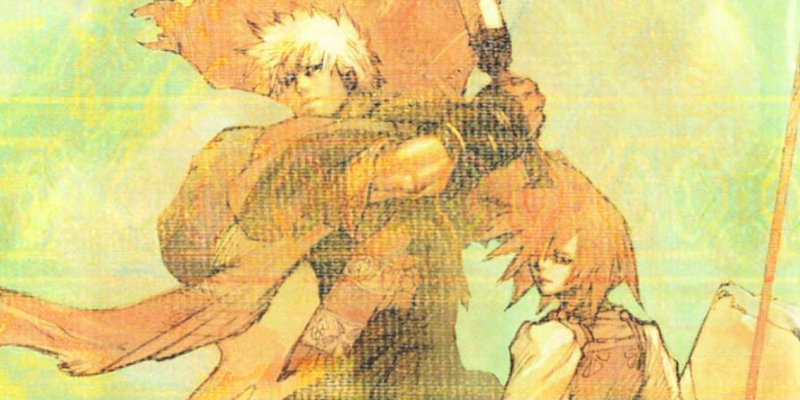
Okay nevermind forget I said anything. Don't trust anything I say, I guess. It turns out this game is also, in fact, Not Very Long, and I was only able to resist the worm in my brain telling me to jump straight into the next game for all of three days, so here's Evergrace. This is the bonus game that I've inserted into the Fromsoft marathon, and it brings us a change of pace before we dive into the last King's Field because it's not really the same genre. It's only like half the same genre? In a way that is a little hard to quantify? I feel justified having thrown it in though, because this game honestly feels more relevant to the mission statement of seeing Fromsoft's design hallmarks emerge over time than Eternal Ring did. This is, for all intents and purposes, their first attempt to translate this style of gameplay into third-person, way before they did it again later and ended up inventing a genre.
Evergrace drops the tank controls we've gotten used to in exchange for something that feels more like a 3D Zelda, except it is ironically missing both the strafe (which has been in every game up to this point) and the dodgeroll (which will famously become synonymous with what's to come). The resulting navigation during combat feels pretty rudimentary, but it's workable if a bit limited; the biggest obstacle is just trying to wrangle the camera to get it pointed at whatever's trying to kill you. The face button layout is largely what we already know, but the sprint returning from KF2 and KF3 after a two-game absence now gets its own button separate from interaction. The magic bar is gone, as spells have been replaced with equipment-based Actions (which are still mostly spells). Instead everything is now reliant on the good old stamina bar, which finally does something with the fact that it's always been confusingly just under the HP value in a way that would make you think they're related: this time they actually ARE the same bar, and there's a bit of risk/reward at play where your attack power will refill to 100% faster as your health visibly shrinks. This game also uses analog sensitivity to give you fine control over the power and cost of individual attacks, which I did not do because I couldn't get it to work on emulation, so I just turned it off and went full power all the time like it's always been.
The plot follows a guy named Darius and his adopted(?) sister Sharline in parallel storylines that you can switch between at your own pace at any save point, wherein they are both transported to an empire that mysteriously vanished a hundred years prior, said to be cursed by a strange crest that Darius himself now bears on his right hand. (Technically Sharline's takes place first, but Darius is the default selection to start the game with.) I won't lie, the lore here is kinda complicated and I had to double-check the manual to be even remotely confident about what was going on. A lot of the backstory and worldbuilding in the game itself is delivered through walls of text on the loading screens that you never have time to read. What is generally important to know is that the first guy with the crest was kidnapped by a mad scientist wizard named Morpheus, who reverse-engineered a man-made "AI Crest" and invented enhanced armaments made from weird magic crystals called Palmira, and as soon as they used those things to go hunt down more test subjects the whole empire disappeared without a trace. There's mystical trees whose fruit is the source of Palmira, and there's a demon who was created by the experimentation who turned this one girl into a weird bird thing, who isn't actually real? A lot of things are just kind of Happening to Darius while Sharline is busy breaking into Morpheus' lab. The voice acting is not great for any of it aside from like two characters. We've had voice acting since Shadow Tower and so far it's kinda just gotten worse.
Progression is largely equipment-based and the characters themselves do not gain levels, though items that allow you to allocate extra points to stats of your choosing do make a comeback from Shadow Tower. Instead, your armor and weapons can be upgraded two times each, which just has a flat money cost and unlocks a new special action with each upgrade level. This is all done through a shop that is also easily accessible from any save point, which is run by this shady tapir guy whose identity is never really explained. On top of upgrades and selling new equipment when you reach new areas, this guy can also fix your stuff (as using actions melts through your durability, also returning after a one-game break), recolor your armor, and sell you bestiary entries for monsters once you've seen them. Most importantly, if you ask him to upgrade a joke item (of which there are several) he has a bespoke voice line where he will call you weird.
The currency is chunks of the aforementioned Palmira, which are dropped every time an enemy is hit rather than just when they die; most things respawn constantly in this game and make it very easy to grind out cash, which the game expects you to be taking advantage of because it's clearly designed around you buying out the shop to get access to the full range of abilities. Starting around the midgame its puzzle design starts relying heavily on using the correct elemental magic in the right place, though increasingly many puzzles also boil down to just wearing the correct piece of armor, or some other more esoteric solution like paying to change your whole outfit to a certain color, or only wearing a certain piece of armor. A lot of the logic feels kind of bizarre until you've adjusted to the fact that most of the puzzles are something like this, and even then some of them are still kind of a reach. You don't go into a game like this expecting to have to regularly switch back into a pair of boots that hasn't been relevant in hours in order to use the elevators, and this mechanic is introduced in the earlygame where these are still the best equipment so you might not make the connection about why a few specific lifts suddenly stopped working. Like I did. This isn't even supposed to be a puzzle and I got stuck on it for like an hour anyway because the conveyance is not great and the item description that tells you that these things have a special lift-control attribute is not available from the equipment menu.
This type of puzzle design is something that Fromsoft has continued to do, but more as a way to unlock bonus content instead of mandatory progression, which I think is the right call because a lot of these are obtuse in a way where figuring it out (or looking it up) has just made me go "ok well that's stupid". Aside from the equipment puzzles, there's also a handful of puzzles that require hitting specific colors on something in sequence, and if there was any hint anywhere in the game that indicated what the correct order for these was supposed to be I never saw it. There's kind of an equal ratio of puzzles that feel nice and intuitive to things where I never would have figured out what it wanted without cross-referencing a walkthrough. The ones I can figure out by myself feel nice, at least! But as you get closer to the end they lean a lot more towards expecting you to be psychic. The design in general starts to fall apart a bit in the last third.
Barring the puzzles, however, the level design itself is definitely a step up from Eternal Ring's whole nothingburger. Which, granted, is not a terribly high bar to clear. There's finally a map again (even if it's just a minimap in the corner of the screen). Its progression is still linear save for a brief section where Darius loops back around to the start of the game, which is fine for what the game is trying to be, but the areas themselves have reasonably complex construction that feels more in line with what came before. Places twist around on themselves interestingly and exploration feels rewarding again. Most secrets are hidden behind some of the more intuitive puzzles, and even the missable one that's a little mean was something I understood the logic behind once I realized I'd locked myself out of it. There's definitely a lot here that is solid, even if not particularly exceptional.
The creature design also marks a return to form after the monsters in the previous game were largely nothing to write home about; this game's sensibilities are clearly following in Shadow Tower's footsteps, and it brings back the dedicated bestiary to throw in a full model viewer on top of it. Even the more generic-looking designs usually have something fun going on, like the giant wasps that inexplicably have human man arms. (My personal favorite is the Chanticleer, which is this vaguely bird-shaped magical construct that is extremely Boschian.) Their gameplay design is largely interchangeable, though about halfway through Darius does run into what feels like a proto-Souls boss, both visually and in the fact that fighting it revolves around managing your positioning to sneak hits in between heavy-hitting melee combos with nasty hitboxes. It's funny to me that this game wasn't even originally part of the marathon when this was here the whole time. As is becoming a bit of a trend, though, the bosses do kind of get noticeably worse once you get into the endgame. Most fights in the last few hours turn into either healing your way through a damage-race, standing at the edge of a platform and spamming attacks while hoping your animation doesn't push you far enough forward to fall off and instantly die, or one of the final bosses whose optimal strategy is "stand there watching it do a slow and harmless animation to remove a chunk of the floor and poke it one whole time as soon as it stops being invulnerable, rinse/repeat for several minutes".
I'd be willing to bet that a lot of where the design falters being focused into the game's final stretch is, once again, a product of its launch title status, and these are things that would have been refined with more time. (Technically it released about a month after Eternal Ring in Japan, but it still counts because it was released alongside both that game and Armored Core 2 for the PS2's western launch.) It's definitely got a lot going on that could have used another pass, given that it's riddled with typos (Darius' name is misspelled as "Daruis" in the character select menu!) and line reads that don't match the subtitles and weird cutoff. But even still, it's clear that this game was where the vast majority of the love was directed during the overlap between dev cycles here, which is helped by the fact that this one also had seniority over Eternal Ring; this game was originally in development for the PS1 and was eventually moved to the PS2 due to technical limitations, so it makes sense that it shares much more of its DNA with Shadow Tower than with the game that immediately precedes it. The Shadow Tower itself even reappears as a super-hard bonus dungeon! Regardless, this game having so much time in the oven definitely helped them form a much more defined vision for it. This game's execution of a lot of things is messy, but it knows what it wants to be. It's got a striking visual identity and fairly in-depth lore with a lot of pretty unique concepts, but the single thing that stands out the most is its music, which I was so curious about that it's kind of what led me to throwing it into the marathon in the first place.
The thing this game is known for among all ten people who have heard of it, primarily, is that its soundtrack is... very unusual. Its composer Kota Hoshino (better known for his work on the Armored Core series) wanted to go for a unique sound to call his own, and the result is a sort of bizarre combination of slightly discordant ethnic-sounding instruments and strange vocal samples with busy, aggressive mixing. And going back to listen to the AC: Master of Arena soundtrack he did before this, it becomes clear that this is sort of a translation of a style he developed for electronic composition into something that sounds more like traditional world music. It's fairly experimental and it's the type of acquired taste that you largely just do not find in video game soundtracks, which is so interesting to me. You'll see this game (in particular the infamously chaotic shop theme) show up in "bad video game music" lists sometimes because it is so damn different that Gamers™ who aren't big into music don't really get that its artistic goal is not necessarily going for conventional appeal. I, on the other hand, already listen to a lot of weird, challenging music and enjoy discovering more, so I'm in more of a position to appreciate what it's doing, though I will concede that it's not always the easiest listening. In context it generally feels a bit more normal, in part because the in-game versions of the songs are mixed more evenly than the album release, but it still really does not sound like anything else in the medium and I think that's super compelling. I wish more video games were bold enough to let their music get this unorthodox.
All these factors that make this game's soul and personality feel so strong definitely make it understandable that, despite all its flaws, this game has its own little cult following if you really dig for it. The Evergrace wiki is shockingly well-kept for a game so niche and forgotten by the wider gaming space, being run by a tiny handful of very dedicated fans documenting everything there is to know about this small game from 26 years ago and archiving things like prerelease changes and Japan-only extended media. Did you know they made two whole tie-in novels for this game that expand on the characters and their story? Did you know someone's actually done a whole fan translation for one of them? I didn't! I think that's really cool! And like, while this game didn't make that much of an impact on me, I do totally get it, because there really is something about it that draws you in. I beat this game last night, immediately jumped into NG+ to speedrun half of Darius' story again so I could go sample the Shadow Tower, and in the process completely lost track of time and stayed up way too late. Fromsoft just laces their games with something, man.
And now, with our brief detour out of the way, we can finally move on to the final King's Fi-what do you mean this game has a sequel that came out before that. What do you mean I'm downloading it right now as I'm writing this. Wha
MAMA'S SLEEPING ANGELS
Let's mix it up a bit with something not from like 25 years ago so I don't get completely burnt out playing a bunch of similar games in a row, yeah? So here's a little offbeat indie game from just a couple months ago, since it's still technically Mother's Day and all. This one was the inspiration for my favorite song off of Gifts [TFR04], an album by a loose collective of indie game devs creating music under the name The Fainting Room; as implied by the title, Gifts is a collection of songs that its members made based on each other's projects. There's a few notable names among the pack (this album has a song for Mouthwashing, as well as one from Mike Klubnika of Buckshot Roulette fame), but for the most part stumbling across this group has been a really neat way to land a lot of cool stuff on my radar that I otherwise might not have heard of. Case in point, given that I got a little obsessed with the song in question for a while, I figured I owed the game that inspired it a look when it came out.
Mama's Sleeping Angels (by solo dev itamu) is a sort of Y2K horror-exploration-extraction game that shares much of its core gameplay loop with Lethal Company, which kinda blew up among streamers a couple years back. The premise is minimally explained and just trusts you to make of it what you will: you, by yourself or with up to three friends, must repeatedly venture into the dreams of an entity known as "Mama" and explore a randomly-generated map of your choosing in order to recover various cursed items to feed to her, whose effects range from beneficial to actively malevolent. Mama's dreams are increasingly dangerous as you enter deeper layers and ask for progressively more curse to sate her, and if all players die before they can bring back enough items, she will happily just eat you instead and reset your run back to zero. Each of the six maps also has one or two imaginary friends to find, typically at the top of a platforming challenge; as you accumulate enough collective curse, friends that you've met on your current run will be permanently added to the hub as NPCs, and freeing them all from the dream unlocks the game's ending.
I am enough of a habitual lurker that I don't really have Internet Friends to play Online Video Games with, so I just chose to go it alone on launch and never made it very far because everything is very much balanced around multiplayer—the vast majority of my runs ended because something aggroed before I even knew it was there, or I found myself in a position where I couldn't escape it, which is Most Positions, especially before you find any jump upgrades. But! As of a couple weeks ago, a "story mode" difficulty was added that reduces damage taken to be essentially nonexistent and increases the round timer to over an hour, so now I can actually go in and properly appreciate the vibes it has to offer. Part of me wishes there was more of a middleground between the brutality of normal mode and the godmode that story mode gives you, but in practice I kinda don't because the enemy behavior would need to be pretty heavily reworked to make it feel at all balanced. As the enemies are now it's still plenty stressful to play around them even without the lingering threat of instant death; those things are just scary on their own and I want to avoid them as much as possible even if they can't hurt me. And the gameplay loop of exploring and finding curses and booking it away from things is strong enough that the game doesn't really need that level of danger to work as a complete experience. To be fully honest, it might kinda be stronger without it?
Like, I'm aware that I am losing Gamer Cred saying the best way to play this game alone is the version that strips out most of the actual difficulty, but I am saying this as someone who does enjoy stupid difficult games. I 100%ed Silksong. I really like the original Monster Hunter. One of my primary interests is old games with rough edges and uncompromising visions, as you can tell by scrolling up a bit and seeing me talk about how cool Shadow Tower is. So I feel like I can say that this is not really the type of game where the challenge is the appeal, at least to me. It's not like there's no risk, because there is still one curse in the game capable of instantly killing you regardless of difficulty, and it is always panic-inducing to encounter and try to get rid of, and that type of stress is an important part of what makes this game what it is. But for the most part, this is the type of game where what I enjoy about it is just being able to take in the surreal vibes and discover weird new stuff in its world. I'm here for the art, and the art is excellent.
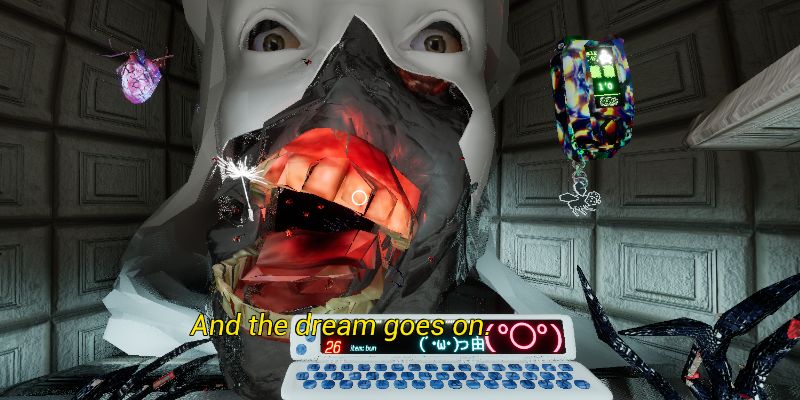
Mama's goes for a low-poly look like a lot of indie horror games, which it makes its own by leaning heavily into deliberate visual jank and a strong scene culture influence, like if you dipped a PS1 into a vat of acid at Hot Topic. The result sort of feels like a busy 3D collage, squashing together blurry messes of pixels and jarringly high-res photo textures and wildly varied smoothness of animation in a way that somehow just Works. It fits well for the procedural level construction consisting frequently of incoherent piles of Stuff clipping into each other and adhering to no form of human logic. It's cohesively incohesive. It's just overall fun to look at. At times the world itself feels like as much of an example of body horror as the monsters are in a (mostly) less abstract sense. And, of course, since this is this website, I have plenty of praise to heap onto the creature designs; these freaks are weird. They're just as all over the place with their aesthetics, but of note: the hub, your grandma's house, is covered wall-to-wall in photos of bizarre roadside-attraction Americana that somehow do manage to inform the general feel of the creatures that appear in these dreams in a way that actually kinda makes consistent sense. Like, yeah, that IS the kind of thing that you'd see wildly distorted in your nightmares, actually. You can even find the exact models of certain enemies around the house, like a doll of the little conquistador freaks. The game's character design is all kinda united by a strange nostalgia for the things that scared you as a little kid.
In Grandma's basement there's an old computer you can boot up to reference an encyclopedia of all the entities and curses you can encounter in the game, along with paintings that can be unlocked by fulfilling other criteria, which are then added to the map generation as something you can find and interact with for an extra reward. Filling out the entries in the encyclopedia is how you earn cosmetic rewards, such as new girls to play as (all of the playable characters are girls) (and btw yes they can kiss each other) or charms to attach to the flip phone in your HUD. It tells you the unlock criteria and the reward even before you complete an entry; there are a lot more entries than there are actual rewards, so they had a lot of fun filling out the rest of them with gag rewards like "one million brownie points" of "some more bugs in the game" or "the smell of burning hair (just imagine it)". Grandma's house also has a landline telephone, which you can use to call any weird numbers you happen to see to get cryptic audio clips that don't seem to have much to do with anything, and a minigame where you throw balls into holes that you can cheat at to get instantly killed for an achievement.
As is only fitting given how I found this game, the soundtrack by crisp and Gecko Afterlife is great, and complements the trippy atmosphere with a solid balance of eerie ambient tracks and surprisingly jammin' beats. Music plays only occasionally, typically at the start of the map and then intermittently between long stretches of silence; the game lets you see the information for the song currently playing at any time by opening the menu. Some tracks cut off abruptly at the end in a way that sounds like an unintentionally misprogrammed loop just to make the vibe feel even more off. It just works for this game as an extension of the chaotic, chopped up aesthetic.
This game's still pretty early in its lifespan, and it shows in the kinks that still need to be worked out. (Notably, since the HUD is a bunch of 3D objects attached to the player model, turning up the FOV causes the whole thing to get smaller and further away and kind of illegible. Fixing this is still a work in progress and it's been something I've just had to get used to.) And there's still a big update on the horizon for the end of the month that'll feature some heavy rebalancing and flesh out a bunch over underloved mechanics. But even in the state it's in now, this game's got a very strong and unique identity going for it and I've been finding it hard to pull myself away as I round up the last few things I need to finally have everything. I can't wait to see it grow into an even more realized form of itself. This thing's got a ton of potential to go big places and it's a gem worth checking out. You wouldn't want Mama to go hungry, would you? Mama is so hungry. Feed Mama. Feeede Mama,., fFEFED NMNAM]A FEE.F[DF MMAA.MA FEE'
FOREVER KINGDOM
And we're back to our more typical pace for these. Forever Kingdom, or Evergrace II in Japan, is actually a prequel to the first Evergrace, and while the first one retroactively felt like it justified its impromptu inclusion in the marathon from a core design standpoint, this one did very much turn out to be a detour. They took this in such a different direction that it doesn't necessarily scratch the King's Field itch the way Evergrace still sorta kinda did, so it ended up taking longer to get back to than it otherwise would have; it's an interesting case of divergent evolution after the first one had so much DNA in common with the eventual Souls games. But I already went and committed to it so I had to play this By Law before I was allowed to play KF4, so I just had to leave the itch un-scratched until it felt like the right time to get back to this first. I won't hold that against it. It's not its fault I got it involved in a hostage situation. It definitely had to grow on me, though.
Forever Kingdom takes advantage of its prequel status to explore a little more of the political worldbuilding that was immediately sidelined in Evergrace by nature of its isekai-ish plot; the ongoing war between villages that was vaguely mentioned a couple times factors more strongly into a few character motives here, though it's still only marginally relevant to the main plot where Darius has once again found himself in a Situation he needs to get out of. Sharline does not make an appearance because Darius is currently unaware she's still alive after a certain childhood incident, so instead we get introduced to a couple of his other friends, the amnesiac Faeana and nice boy Ruyan (just pronounced Ryan). These three are out on their way to enlist in the local army when they come across an evil magician accosting a girl that Fae feels a strange connection to, and for having the audacity to step in he hits the three of them with a Soul Bind curse that they now have to go find a way to break. All of this to say: they share a healthbar.
Therein lies the gimmick of this game: it takes the multiple characters idea from Evergrace and hands you a more traditional RPG party that behaves as a singular unit where you can swap who you're controlling on the fly, rather than switching between distinct storylines where they're each doing their own thing. The controls no longer resemble Fromsoft's typical dungeon crawlers at all, and instead you've got a catch-all attack/interact button for your active character, and then all of the other face buttons are dedicated special attack (Palmira Action, or PA) buttons for each of them. (There is mercifully a setting to have the leader's special always on the same button rather than each being locked to the same character no matter what, which messes with my muscle memory so bad.) The idea is that you build up your PA meter with each character using basic attacks until you're ready to start doing some real damage, at which point you can start combo chaining PA attacks together with all three characters at once to refund that spent meter. Juggling an enemy past the point where it runs out of health will award you with Overkill, which results in it dropping Palmira you can use to upgrade your equipment; this is now separate from the currency, so you're incentivized to master the combo mechanic to get your stuff in good shape. (This does reveal how much upgrading everything functioned as a money sink in the first game, because you will end up with way more cash than you'll ever need.)
Character progression is still based entirely on equipment with no traditional leveling system, though on the whole it isn't quite as heavy of a mechanical focus this time around. Rather than the ever-growing list of actions that you can choose from depending on your current equipment, you're back down to a single offensive spell per character based on what's equipped in their accessory slot, which they can increase their proficiency with by fighting with it on. The game is overall more designed around keeping your bases covered across your party and switching between them to situationally manage things like elemental resistances and damage types: your AI-controlled party members will automatically block most damage, so the only one you need to worry about moment-to-moment is the character currently in the lead. About half of the puzzle design is still based around equipping the right things, but for the most part has loosened up considerably to just be looking for equipment of a certain type or with a certain element, which overall feels a lot more approachable. The recoloring mechanic at the shop is also gone, narrowing it down even further. On that note: the weirdo shopkeeper is back and still unexplained, except for some reason he's blue and huge now, and the booths for each equipment type are manned by smaller clones of him whose availability changes per save crystal. Of course. There may be no purely cosmetic options anymore, but there is a mechanic where he will judge your fashion choices and give you a discount if you can hit certain approval rankings.
The difficulty balancing is a bit chaotic because it's kinda hard to keep a consistent pace on your upgrades, so you'll end up in situations where you can fully upgrade something to make one area a cakewalk and then by the next one you're getting stomped again because you haven't put points into the correct thing for whatever was coming next. Resistances matter a lot and if you're not specifically statted into the right ones everything will happily instakill you, and if you do survive the first hit it's very easy to get stunlocked to death by a large chunk of the enemy roster; there's no single best armor in the game with no weaknesses, so this is something you always have to be paying attention to, even on NG+. It's a neat idea, but kinda frustrating in practice. On the other hand, you are constantly being showered in free full heals and buying more is dirt cheap, so it is trivial to cheese your way through most things anyway, and the only place where I burned through all 9 that they let you carry at a time was the two consecutive final boss fights. (No checkpoints between those, by the way, and the first is the hardest thing in the main game by a wide margin. Might genuinely be worse than the absurdly long final boss runback with the two minute unskippable cutscene in Eternal Ring. Thank god for savestates.)
Enemies once again have the potential to leave behind rare drops of better equipment to give you an edge, but it's a gamble now because they're inside chests that pull from a pool of random prizes, including Absolutely Nothing (odd to include when chests aren't guaranteed anyway?) and a solid chance for a little monster to pop out and unavoidably latch onto you, rendering your current leader unable to act for like a full minute. These guys suck so much that it kinda makes the whole RNG chest mechanic not worth engaging with; if it's even possible to hit them off of your party members, it's finicky enough that I was never sure whether I'd actually succeeded or had just been trying so long that I'd waited out the timer. The chests just become another obstacle, because you'll also end up in scenarios where one guy in a thrall of enemies drops one and opening the chest will take priority over your attack input on the same button, suddenly leaving you wide open to get smacked around even if there's no trap inside. Or like, sometimes there's just a guy in a tight corridor who drops one and you just have to gamble to get it out of your way. I was never really happy to see a chest drop and went out of my way to avoid them whenever possible, which is probably not what you want out of a mechanic that's supposed to be a reward.
This game is split into informal chapters separated by cutscenes where the characters sit around a campfire and discuss the latest developments, after which the game usually just kind of transitions to a new area with no context for why we're here now. This other guy we're traveling with ran off to a specific place and we gotta go try and find him, so the only way there involves getting stuck in this random irrelevant cave underground, I guess. We have to go fight this one person and by the way we're in this elemental temple we've never mentioned before now because apparently we just magically know she's here? A lot of these areas feel like they were designed as video game levels first with no real consideration as to how they fit into the world or story at all. They're decent enough at their job of being video game levels, but it all feels kinda disjointed. The plot itself is alright, and the voice acting is reasonably better than it has been for these past few games, though there are still a handful of performances that clearly had little to no voice direction behind them and a few scenes in particular that come off unintentionally really goofy. Actually hold on I just looked up the voice cast for this what do you mean Charles Martinet plays the main villain in this game. this has completely derailed my train of thought. super darsul world
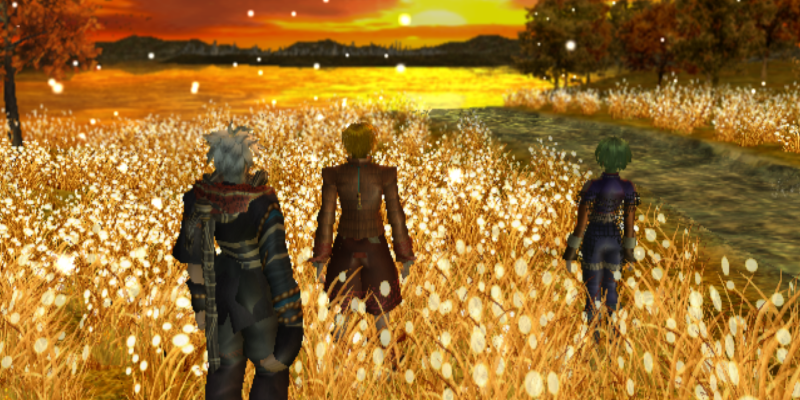
Anyway, this game's strengths once again lie in its aesthetic direction and overall personality. The distinctive autumnal feel to its color grading returns as the key signature of the series' visual identity, and the loading screens now feature character bios with gorgeous portrait art. The creativity in the monster design follows suit from the precedent set by its predecessor, though there's unfortunately no bestiary in this one where you can view them at your leisure; so I've had to just compile them all myself because, consequently, they happen to be very poorly documented anywhere easy to find online. (I'm sure it says something that I was willing to play through the entire game a second time in a row on NG+ to get all these screenshots, and giving myself the time to chew on it some more has been nicely meditative. And then I speedran most of it a third time because I missed something exclusive to a side mode. It is called Forever Kingdom because I have to play it forever. I am ready to be done with this game.)
Likewise, the music is once again weird as hell; its composition and mixing on the whole feels less bold than Evergrace's wild swing of a soundtrack, but especially getting into the game's back half Hoshino continues to put out a very strikingly unique sound, further emphasizing the haunting, nonsensical vocals and incorporating a crunchy electric guitar into the mix more as an accent layer than as a melody line. It's a decent bit closer to his usual electronic style, and he makes it work well while still not sounding like it could be anything other than Evergrace. It might not have quite the immediate memorability factor, but there's a hypnotic quality to a lot of it that's thoroughly wormed its way into my brain either way. I firmly believe Kota Hoshino should be allowed to do whatever he wants forever. I'm gonna be so real that guy accounts for like most of my motivation to loop back around and play all the Armored Cores sometime down the road.
I think it's really such a shame this series ended up dying here. These games are very flawed, yes, but they have such a strong artistic identity going for them even given the massively different gameplay between its two entries, and I would have been so interested to see what other directions they might have taken it going further. As it is, the series has a sort of paradoxical quality of being very confident about what it wants to be in every way except as a video game in itself, and it let that drag it down into a meandering unsure sort of thing that kinda squandered its chance to find that final piece before it was shelved. It had something going with the equipment focus and the playable character swapping, but the execution just wasn't as fun or well-realized as it needed to be to sustain itself. This type of thing is a big part of why I'm so fascinated by old, forgotten games, because there's this whole world out there of unique ideas and styles that fell to the wayside because they were flawed or "just okay" enough in a few key places to doom them to obscurity. (Incidentally, this is also why I'm a Sonic fan, because it's the one series like this where they actually do have the money to just keep going and trying weird things that don't always work.)
In particular, it's so unfortunate that these games didn't last long enough to see the technical improvements that could have really let them shine visually; we could have gotten some absolutely stunning games out of this IP if it had grown with the additional hardware experience they'd need to more closely resemble the 2D artwork made for it. Art direction like this on something less limited by early PS2 graphics would go crazy. I wanna see what they could have done with this a few years later as a contemporary to something like Ōkami. And it's not like there wasn't anywhere else to go with the story! We've still barely explored any of the actual politics going on here. We never once actually saw anyone from the army we're supposedly at war with. The framing of why they started fighting in the first place makes them sound like they had kind of a valid point, but the issue at play just goes fully unchallenged because all of the characters are biased against them inherently, and then Evergrace establishes that our side won the war off-screen. I'm just gonna have to go read those damn books, aren't I. I get it. I understand now. I'm probably gonna be thinking about these games and the potential they had for a long time.
This game is ultimately a good look at the sort of experimental midrange pivot that has since gone largely extinct in the modern games industry; as the price of making games has ballooned exponentially for everyone working with a proper budget, most studios just can't afford to make a strange, compelling 6/ or 7/10 like this anymore, so it's all the more interesting to see just that kind of game from one that's since become a household name. Though! It should be noted that FromSoft themselves have actually recently worked out a setup to get lower-budget stuff out between their own big projects again, using games like Elden Ring: Nightreign as a sort of onboarding platform for new blood to get used to making things in an engine that's already ready to go. And like, honestly, I'm so glad to see someone in this industry finding a solution to enable lower-budget stuff that doesn't need to be a guaranteed success to keep them afloat, and who aren't at risk of getting shuttered by a bigger publisher for it. They've been stuck in the Souls mines for half their existence at this point. I'm so ready to see them try weird, different stuff like this again. It may be asking too much to get my hopes up, but... I mean, they finally brought back Armored Core after a decade, right?
SONIC THE HEDGEHOG 3 (PROMO CARTRIDGE)
It's been way too long since I talked about something tiny and stupid on one of these, which is something I must apologize gravely for. There was always supposed to be a balance between these and video games that people actually like. No better way to rectify this situation than with, uh. This thing?
So this slipped under my radar when it came out a couple years ago. It's a novelty Sega Genesis cartridge that Paramount released as promotion for the then-upcoming Sonic the Hedgehog 3, as in the movie with Shadow in it and not the video game of the same name that is famously also on the Sega Genesis. And it is fully functional on real hardware, which is kinda cool, for what it's worth! But I did not do that and just ran it on Kega Fusion because I don't have a Genesis and I am not ordering one just to play the Sonic the Hedgehog 3 Movie Promo Cart, which I also don't have. I refuse to spend real money on this.
When you boot the game up the first thing you hear is a clip of Sonic and Tails from the movie, which is poorly digitized and bitcrushed to hell, which then segues into the Paramount intro variant from the movie and the classic SEGA logo, whose audio is ALSO bitcrushed to hell despite the fact that this screen exists on every other game ever made for this console and it always sounds exactly the same and fine. The main screen then pans down a sprite-based version of the poster with Sonic and Shadow drawing a big 3 with their speed trails, and this admittedly does have a pretty cool parallax effect going on while a barely recognizable version of the Live and Learn riff plays in the background. Above Sonic and Shadow are three options that say "Characters", "Posters", and "Unlock".
The Characters option takes you to a page where you can look at the characters in the movie, each of which are placed on a grid that you can either manually select and option from or just hit A to button forward through them all. Each character page is just the promo image for each character that gives their name and the name of their actor, and each one is accompanied by—you guessed it—an extremely bitcrushed voice line from the movie. I cannot stress enough how low-quality this cart's audio is. I went and downloaded a copy of Sonic 2 to test to see if there was something wrong with my emulator because I could not believe how bad this thing sounded, but as far as I can tell it is genuinely just Like That. Half of these voicelines are so quiet I can barely make out what they're saying, and I have the interpretive advantage of having seen this movie. Meanwhile, the Posters option brings us to a gallery where we can see versions of the movie's posters at a beautifully detailed 190x300 pixels, with an incredibly dinky song in the background that mostly makes me think of the extremely forgettable cartoon tie-in games I had for my GBA as a kid.
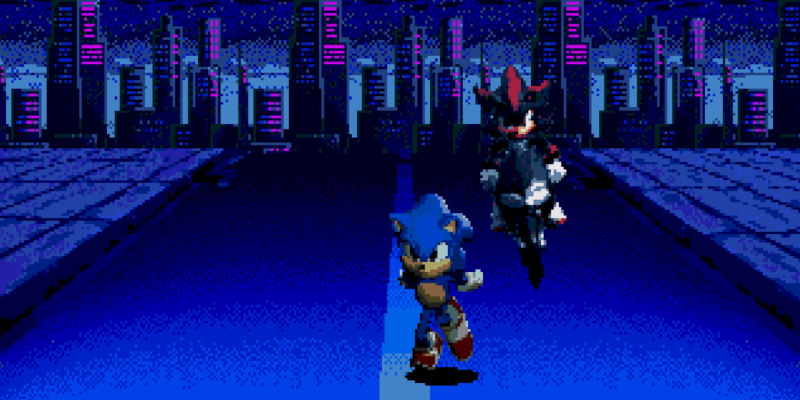
The "meat" (???????) of this cartridge, as in the only thing that could theoretically be considered an actual game, is the Unlock option, which takes us to a simple scene where you can control Sonic as he runs down a city street followed closely by Shadow on his bike. Sonic is a reasonably decent prerendered 3D sprite with a simple running forward animation and variations thereof for moving left and right, while Shadow is a static PNG that tilts to the side in the direction you go. You can jump, and move horizontally, and that's it, and you have no reason to do any of those things because this is an endless autoscroller with no hazards whatsoever. There is a repetitive little tune with a very obvious loop, which is the best-sounding piece of audio on the whole cart by a very wide margin, and was apparently composed by Nick Lutsko?? The RNC Theme Song guy?? Which is... fascinating to me. I don't know how to feel about this. This is the wildest wrinkle of this whole package to me.
Entering the original Sonic 3's level select code while playing in Unlock mode will play the one bespoke voice line recorded for this game, and unlocks a fourth option called "Trailer?" on the menu, which also removes the Live and Learn riff from it for some reason. Unfortunately, they did not attempt to cram an entire trailer into this game cart like the Sonic X episode GBA cart that actually exists for some reason. Selecting this just plays a short clip of Shadow and reveals the release date for the movie's final trailer. And that's it. That's everything on the cart.
This entire thing feels so, so incredibly bootleg that it's hard to believe this actually is an official Sonic the Hedgehog Product™. It is so compelling to me how bad this thing sucks on like every level. There's like, a semblance of competence in the presentation of the Unlock mode, and it is not used for anything of substance at all, but something about the complete emptiness of it all sort of intrigues me on some strange level. There's a liminality to it. This feels like the type of thing you'd see somebody make for like, their creepypasta fangame. Just you and your janky little Sonic running down a blue moonlit street forever and ever, tailed by a pursuer who never does anything besides perfectly follow you. Everything you can make Sonic do is futile and the only way to "win" requires external knowledge and does not involve actually playing the game. I don't know where I'm going with this. This cart is not very good.
-
This article is a work in progress! Check back throughout the year for more of my little videogames diary!
Other years' entries can be found HERE.